
MiniMax H3: What creatives need to know
Learn what MiniMax H3 is, the creative capabilities MiniMax is introducing, and why this latest AI video model matters for creative workflows.
Envato: Get every type of asset for any type of project, and access to AI tools. Start now

When the jury at OMNI 1.5: HYPERPHANTASIA handed out the Envato Pattern Recognition Award — the prize we created with the festival to honor the most creative fusion of stock, AI and cinematic intent — it went to a five-minute absurdist action-comedy about a koala who just wants to watch the football.
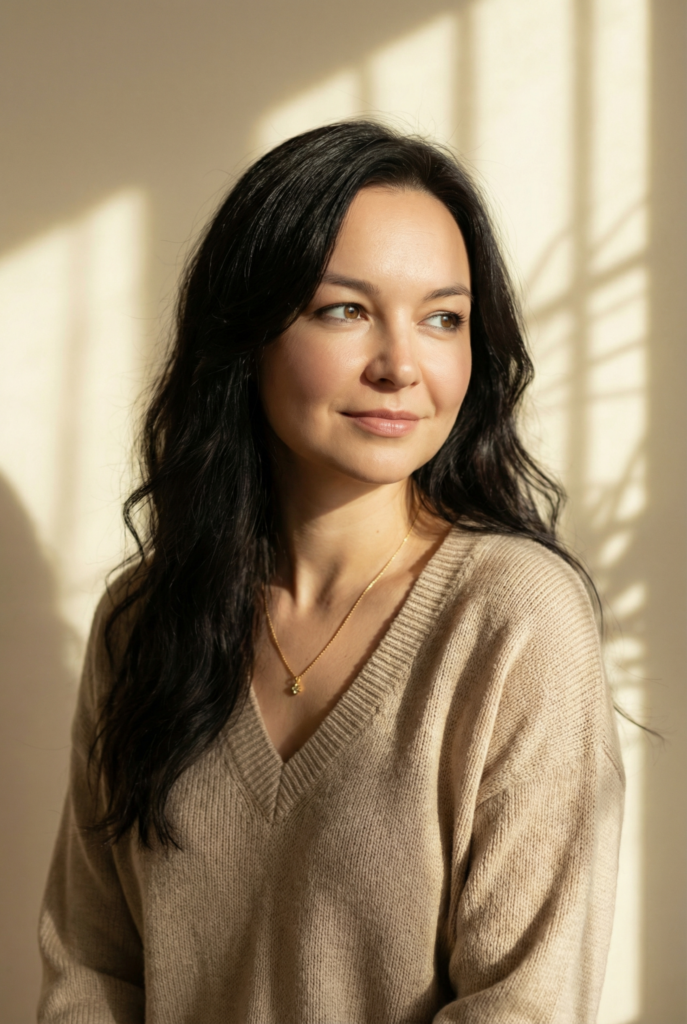
The Reckless Play is only the second film Maria Zozulia has ever made. Her road to it runs through more than eight years in content creation and marketing, a life upended by the full-scale invasion in 2022, an unlikely detour through elaborate 3D cake sculpting, and 200 hours of production spread across six weeks — as director, screenwriter, editor and sound designer all at once. Then word reached her from Sydney: a festival audience laughing from the first chase to the final twist, half a world away from the desk where she made it.
She is exactly the filmmaker the Pattern Recognition Award was invented for: someone using stock and AI together not as a shortcut, but as a full production pipeline for a story nobody else would have told.
Watch the film, then meet the woman behind the koala.
Envato: For readers meeting you for the first time: who are you, where are you based, and how did you find your way to filmmaking?
Maria: I’m an AI filmmaker based in Kyiv, Ukraine. My professional path has been connected with content creation for more than eight years. I worked in marketing, where I led my own team, and later began creating visual content independently for my own projects.
Even while I was working in marketing, I used to envy designers — in the best possible way — because they could take an idea out of their head and turn it into something visual. I wanted to be able to do that too, so I enrolled in graphic design courses.
Then, in 2022, Russia launched its full-scale invasion of Ukraine, and my life changed dramatically. I reassessed my goals, stopped chasing things that, as it turned out, I had never truly wanted for myself, and began learning everything I had always put off. I learnt to cook — even though before that I couldn’t make an omelette — discovered pastry making, and began creating elaborate 3D cakes shaped like a kettlebell, a beehive or a balloon dog. Every cake I made was a little story of its own.
To present my work beautifully, I began studying photography, videography and basic editing. Around the same time, the first AI video tools appeared. Making a proper film was out of the question back then: the results were short clips with a plasticky look and lots of morphing. Even so, I was fascinated by the possibility of bringing to life something that had previously existed only in my head.
Today, the technology has reached a point where it is possible to create cinematic stories and complete films. What I love most is being able to visualize a world I have imagined and share it with an audience.
For anyone who has not seen it yet, how would you describe The Reckless Play in your own words?
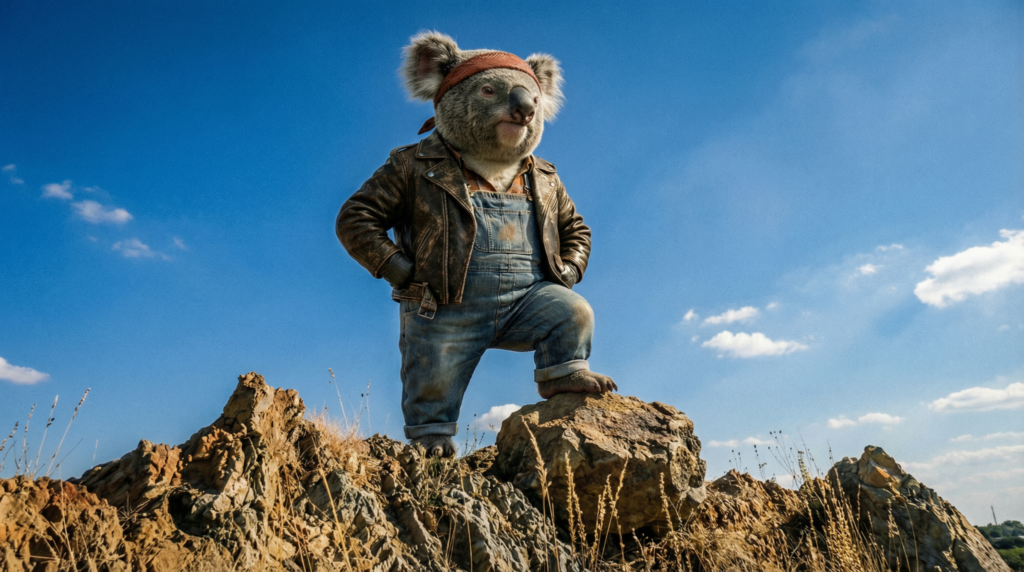
Without giving too much away, The Reckless Play is a fast-paced absurdist comedy about an Australian koala living in the Texas backcountry. Desperate not to miss the World Cup final, he sets off on a wild journey filled with high-speed chases, unexpected encounters and plot twists.
I wanted to play with the imagery of a classic crime action film: make everything tense, gritty and cinematic, but put a small, hot-tempered and utterly reckless koala at the center of the story. He simply keeps moving towards his goal because, whatever it takes, he has to reach the pub and finish watching the match. And at the end, the audience gets a completely unexpected comedic twist.
A ticking clock, a pub on the horizon, and one very determined marsupial. Where did this idea come from — and why a koala?
I absolutely love koalas. It started in 2019, when I saw them for the first time at Vienna Zoo. They seemed incredibly cute and, at the same time, so completely unbothered, as though they couldn’t care less about anything happening around them. After that, I started buying almost anything with a koala on it: keyrings, mugs, clothes with koala prints. When I began working with AI generation, the koala naturally became my personal mascot.
When the newest video models arrived, I saw how well they could already handle complex movement, emotion and interaction between characters, and I realized: finally, I could make a high-quality animated film starring a koala and show him exactly as I had always imagined him.
I knew from the start that it would be a comedy action film. When I began working on it in February, I already knew the World Cup was coming that summer, so the idea of the koala watching the final felt perfectly timed. First came the inciting incident: at the most important moment of the match, his television breaks. That immediately gave the protagonist a clear goal — to finish watching the final — and a time limit. The other characters, dialogue and plot twists began to grow around that situation. I initially expected the film to be two or three minutes long, but the story kept developing and eventually grew to five.
From the very beginning, I pictured the main action against dusty desert landscapes. It was important that the protagonist lived far from civilization, so the journey to the nearest working television could become a real adventure.

You’re in Kyiv, but the film lives on the other side of the world — an Australian koala loose in the Texas backcountry. What drew you to building such a faraway, sun-baked world? And have you ever been to Australia?
Australia is literally on the other side of the world for me — a completely different continent — so of course I would love to visit. But honestly, the main reason would be the koalas. I really want to hold one; everything else would be a lovely bonus.
I think it is precisely our frightening, constantly tense reality that makes me seek comfort in creativity. When I create AI films, I lose myself in the process and, for a while, stop thinking about the horrors unfolding around me. Creativity genuinely helps me cope with reality and stay grounded.
There were nights when I would be working late on the film, an air-raid alert would begin, and I would say to myself: “I’ve put so much work into this and I have to finish this film. God forbid a missile hits right now.” Strangely enough, that stubbornness helped me manage the panic. Working on such a distant, colorful and slightly crazy world became a real refuge for me.

The title feels like a nod to football parlance — a “reckless play.” Are you a football fan yourself? Did the real World Cup inspire the story?
The title brings together two meanings for me: play refers to the football match at the heart of the story, while reckless describes the koala’s behavior perfectly. He acts completely recklessly throughout the film, so The Reckless Play was the perfect way to unite the football theme with the protagonist’s personality.
Yes, the World Cup worked perfectly as the basis for the story, but I invented the specific match without looking at the real group line-up. Australia was an obvious choice because of the koala, while the USA came from the Texas setting. I had no idea that those national teams would end up in the same group, and I found out when the film was about 15% complete. It felt as though reality itself had decided to play along with my plot. I love those coincidences that feel too perfect to be accidental, and I always take them as a sign. At that moment, it felt as though this story had appeared exactly when it was meant to. The film wasn’t finished yet, but its fictional world had already crossed paths with reality.
I used to be a huge football fan, so I know exactly what it feels like to worry about your team, feel nervous throughout a match, react emotionally to every moment, lose your temper and swear almost like my koala. I think I borrowed part of his football temperament from myself — ha-ha. Although I still wouldn’t punch the screen.
When Ukraine and Poland hosted Euro 2012, my family even borrowed money so we could buy tickets to a quarter-final. That is how serious a football fan I was back then.

This is only your second film. What was your first film, and what did you learn from it that shaped this one?
My first film, The Profession, was completely different — a lifestyle comedy-drama with an emotional and unexpected ending. I wanted to tell a story whose meaning would resonate with many people, or at least make the audience stop and think. The film won Best Screenplay at the Ukrainian MEGOGO AI Film Festival 2025 and was later selected as one of five AI films screened at the European Film Market during Berlinale 2026.
After that win, I knew for certain that I wanted to continue filmmaking. As a child, I was afraid to tell stories, and I never wrote school essays at all: I was afraid to begin, afraid to hear other people’s opinions and afraid to discover that someone else had done it better. But this time I simply tried — and found that my ideas could be interesting to people other than me.
The most important lesson I took from my first film was to trust my own ideas. Sometimes, in the middle of the process, everything you have invented begins to feel like nonsense. You lose heart and want to abandon the project. But it is important to keep going and see the story through to the end.
I also learnt how important it is not to ruin the ending. Not every scene needs to be climactic, but the beginning — and especially the ending — must be developed very carefully. If the finale is vivid and emotional, the audience is likely to remember the whole film.
Your film is full of high-speed chases, stunts and fast cuts — some of the hardest things to create with AI video. How did you build that speed and energy? Which scene was the hardest to get right?
The main challenge was probably maintaining the energy and momentum across all five minutes. Speed in scenes like these comes not only from the characters’ actions, but also from the camera angles, camera movement, shot length and editing.
I broke complex sequences into 10–15-second multishots and generated different versions. I then selected the best fragments from several attempts and assembled them in the edit to create the pace I needed. It was important to describe the action, angle, camera movement and sequence of shots precisely in the prompt. Volodymyr Cherner’s Proshivka course played a major role: it helped me turn my visual instincts into concrete knowledge, learn the terminology and translate a visual idea into an exact prompt. As a result, I began directing each shot much more consciously.
The farmers’ sequence was the hardest. The koala crashes into a barn on a tractor and destroys it completely while the three farmers — a boar, a donkey and a skunk — sit inside, watch football and talk to one another. Each one needed a distinct voice, accent and emotion, as well as the correct line. This section took more than 30 generations because the voices, actions and order of the dialogue kept getting mixed up.
Then there was the koala’s tail. The AI kept adding one, even though koalas do not have tails and there wasn’t one in the reference images either. I had to remove it using video inpainting. Where on earth are all these koala tails coming from? Sometimes I wanted to tell the model directly: stop drawing it — this is getting offensive!

Your characters are animals with big personalities. How do you direct a “performance” from a koala?
Directing the performance began with a precise written description. In the prompt, I specified what the koala should do, which emotion he should show, where he should look and how he should deliver the line. I then compared the results and chose the version that captured his personality and timing most accurately.
I love vivid, charismatic characters, so I developed each of the film’s ten characters carefully: their visual appearance, clothing, personality and way of moving. It was important for every one of them to feel distinct.
Of course, I created the koala with particular affection. For some reason, I had always imagined him as a cool biker koala — hot-tempered, sharp and reckless, but also cunning. I used those traits as my anchor when writing his actions, reactions and dialogue into the prompts, so that in every new scene he remained recognizable not only by his appearance, but also by his personality.

Comedy is difficult in any medium. How did you think about timing and jokes when you were writing and editing?
I can’t do without comedy, and I love dynamic scenes. If a story has no humor at all, I quickly become bored with it myself.
Sometimes I see a funny scene immediately; other times, I spend a long time trying different options. Plot ideas suggested by AI tools often seemed too obvious and generic, so my boyfriend Alex helped me brainstorm. He has experience creating stories and understands the principles of animation very well. We came up with some of the plot turns and character ideas together — Alex invented the moose sheriff, the koala’s out-of-control tractor ride and the trio of farmers.
Music also plays an important role in comedic timing for me. When I choose a track as I begin developing a new story sequence, it helps me feel the sequence’s internal rhythm: structure the order of the scenes, choose camera angles and movements, and understand where to accelerate the edit and where to hold a pause. It is important for me to find the track before the sequence is fully assembled. On Envato, I search for music by genre and keyword, but reference search helps me most: I can paste in a link to a well-known composition and get a selection of similar tracks.
I used seven Envato tracks in the five-minute film. Each one supported a different story sequence, mood or change of pace, and helped tie the fast-moving events together. I particularly remember searching for the music for the finale. When I found the right track and placed it under the scene, my first thought was: “This is brilliant! I’m not even going to look for anything else.” It hit the mood so precisely that the ending immediately clicked into place.
You made this film with a very small budget. What did that force you to invent or solve creatively — and did AI tools change what was possible for you?
The biggest change AI tools brought was making this kind of project possible for one person at all. In the past, an animated film with ten characters, multiple locations, dialogue and dynamic scenes would have required a studio, a large team of specialists, a substantial budget and several months of production. Without proper funding, an idea like this might never have moved beyond the concept stage.
Today, that barrier is much lower. With an idea, access to the right tools and a strong determination to see the story through, one person can create a film on a relatively small budget. In my case, that meant becoming the director, screenwriter, editor and sound designer all at once, as well as building my own production workflow to connect all these responsibilities.
The Reckless Play took me around 200 hours spread across approximately six weeks. AI dramatically reduced the financial and organizational scale of the production, but it did not make the process easy. When you work alone, every creative decision, every mistake and every new attempt rests on you. So it is still an enormous amount of work for one creator — the difference is that a film like this can now be made without a studio or major funding.

Your very Australian hero premiered in front of a real Australian audience in Sydney. What did that mean to you?
When I saw the photos and videos from the screening, I simply couldn’t believe that my film was being shown to such a large audience in Sydney. I was told that the audience kept laughing throughout the screening. For me, that is the highest reward: the film was made so that people could connect with the story and feel genuine emotions.
I particularly wanted Australians to see the film, and I worried about how convincing the protagonist would sound. I checked every phrase containing Australian slang — and even every swear word the koala uses — and listened to interviews with Australians. My brother Andrii, who has an excellent command of English, helped me with several English phrases. During generation, the protagonist’s Australian accent would occasionally disappear, so some scenes had to be remade many times.
The fact that the Australian audience received the film so warmly, and that the jury awarded it the Envato Pattern Recognition Award at OMNI 1.5, was an enormous honor for me.
Last one: what do you want to make next — and what would you say to another creator starting out with almost nothing but an idea?
Since completing the five-minute The Reckless Play, I have already made a two-minute concept trailer that expands the world of the story and reveals more of the protagonist’s past. In the future, the idea could be developed into a full series. I also want to begin work on a new film whose script is already finished. It will be a science-fiction drama with elements of comedy — how could it not be? — about the future, human values and emotions.
My first piece of advice to new creators would be to structure the production workflow properly. Do not begin generating the first scenes while the script is still changing. Finalize the story first, then create the characters and locations, and only after that move into full production.
AI tools are updated very quickly, so it is better not to stretch the main generation phase over many months. Otherwise, the earlier scenes may begin to look noticeably different in quality from the later ones, and you will want to remake half of a project that is already finished.
At the same time, there is no need to wait for the perfect model. The tools will keep changing, but what holds a story together is a well-developed script, an original idea and a properly organized process.
Got your own reckless idea waiting to run wild? Envato’s AI tools for video, image, music & more — plus 25 million+ creative assets — will help you bring your vision to life.
This interview has been lightly edited for length and clarity.
Learn what MiniMax H3 is, the creative capabilities MiniMax is introducing, and why this latest AI video model matters for creative workflows.

Compare AI music generators vs stock music across originality, licensing, cost, and Content ID risk. Learn when AI earns its place, when a licensed catalog is safer, and how a hybrid workflow uses both.

Learn how to replace text in images with AI. Update headlines, add copy, and preserve your design using the Replace or Add Text Shortcut in Envato.

How do you direct an actor who doesn't exist? Robert Gaudette spent months protecting the gentleness of a man made of pixels — throwing away flawless shots because Marcel wouldn't have moved that way — until a theater full of strangers went quiet for someone who was never there.

